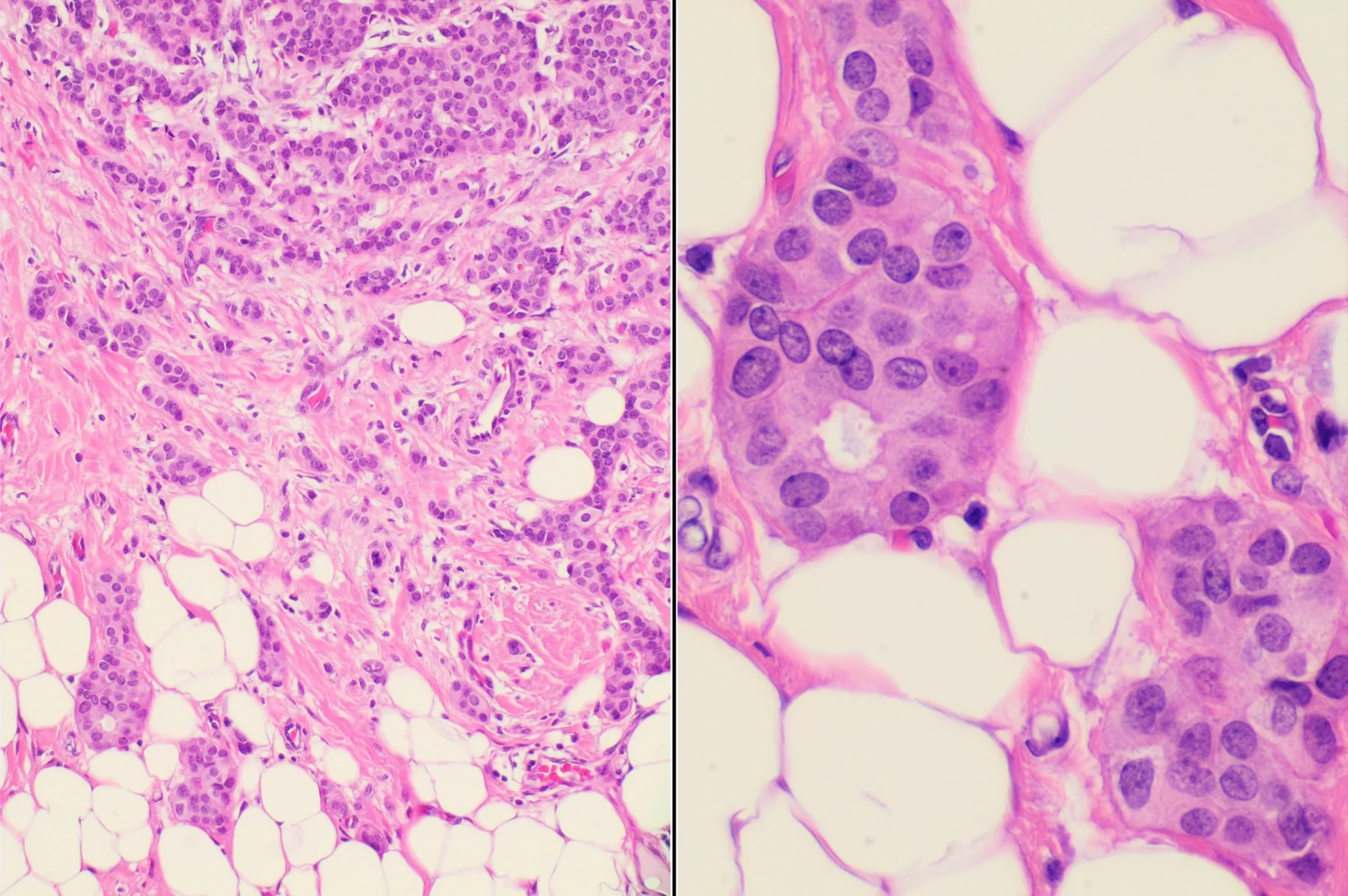
What breast cancer is
Breast cancer is a disease in which abnormal cells in the breast grow out of control and form tumours. [1]
If left unchecked, the tumours can spread throughout the body and become fatal. [1]
Breast cancer cells begin inside the milk ducts and/or the milk-producing lobules of the breast. [1]
The earliest form (in situ) is not life-threatening and can be detected in early stages. [1]
Cancer cells can spread into nearby breast tissue (invasion). This creates tumours that cause lumps or thickening. [1]
Invasive cancers can spread to nearby lymph nodes or other organs (metastasize). [1]
WHO key facts
Breast cancer occurs in every country of the world in women at any age after puberty but with increasing rates in later life. [1]
Approximately 0.5–1% of breast cancers occur in men. [1]
Female gender is the strongest breast cancer risk factor. Approximately 99% of breast cancers occur in women and 0.5–1% of breast cancers occur in men. [1]
Risk and protection
Approximately 80% of breast cancers occur in women with no specific risk factors other than sex and age. [1]
Certain factors increase the risk of breast cancer including increasing age, obesity, harmful use of alcohol, family history of breast cancer, history of radiation exposure, reproductive history (such as age that menstrual periods began and age at first pregnancy), tobacco use and postmenopausal hormone therapy. [1]
Family history of breast cancer increases the risk of breast cancer, but most women diagnosed with breast cancer do not have a known family history of the disease. [1]
However, absence of a known family history does not necessarily mean that a woman is at low risk. [1]
Nothing can guarantee you won’t get breast cancer, but there are several protective factors that can reduce your risk. [4]
Factors that can lower risk
Some protective factors involve avoiding factors that are known to increase your risk of breast cancer. Examples of these protective factors include reducing or eliminating alcohol consumption and maintaining a healthy weight. [4]
Screening
Breast cancer screening is looking for breast cancer in people who do not have symptoms of the disease. This can help find breast cancer at an earlier stage. [3]
Breast cancer screening has been found to reduce deaths from breast cancer and is an important part of routine health care for women. [3]
Several tests may be used to screen for breast cancer, with mammography being the standard test for most women. [3]
If you are at high risk for developing breast cancer you may have breast MRI along with mammography. [3]
Breast MRI uses radio waves, a strong magnet, and a computer to create detailed pictures of the inside of the breasts. It does not involve radiation. [3]
If you have dense breasts you may be offered breast MRI along with mammography. However, it is not known whether additional, or supplemental, screening with MRI leads to better health outcomes in women with dense breasts. [3]
If you have dense breasts, you may be offered screening with ultrasound in addition to mammography. It is not known whether additional screening with breast ultrasound leads to better health outcomes. [3]
A clinical breast exam is a physical exam of the breast done by a health care provider. He or she will carefully feel the breasts and under the arms for lumps or anything else that seems unusual. A clinical breast exam alone is not an adequate screening test for breast cancer. [3]
It is important for all women to be aware of how their breasts normally feel so that they can check with their doctors about any unusual changes. Even if you have recently had a normal mammogram, you should let your doctor know if you feel something unusual. However, breast self-exams are not an adequate breast cancer screening test on their own. [3]
All cancer screening can have both benefits and harms. [3]
False-positive results can cause mental and emotional distress and require additional follow-up procedures, such as biopsies, that can themselves cause harm. [3]
Some cancers found during screening may not have caused problems during a woman’s lifetime and would not have needed treatment. [3]
Awareness and misconceptions
Findings highlight that limited breast cancer awareness, misconceptions and sociodemographic disparities significantly affect women’s health-seeking behaviours for breast cancer in Uganda. [9]
Family history of breast cancer increases the risk of breast cancer, but most women diagnosed with breast cancer do not have a known family history of the disease. [1]
However, absence of a known family history does not necessarily mean that a woman is at low risk. [1]
Treatment
Treatment combines surgery, radiation therapy and medications. [1]
Different types of treatment are available for breast cancer. You and your cancer care team will work together to decide your treatment plan, which may include more than one type of treatment. [5]
Your treatment options may include both local and systemic treatments. Local treatments, such as surgery and radiation, are directed at the area with cancer and not the whole body. Systemic treatments, such as chemotherapy, are drugs that can reach cancer cells throughout the body. [5]
There are different treatment approaches for each type and stage of breast cancer. [5]
Coping and support
You may have just learned that you have cancer. Or you may be in treatment, finishing treatment, or have a friend or family member with cancer. [8]
Having cancer changes your life and the lives of those around you. The symptoms and side effects of the disease and its treatment may cause certain physical changes, but they can also affect the way you feel and how you live. [8]
The information in this section is meant to help you learn how to cope with cancer and the many issues and concerns that occur when you have the disease. [8]
There are resources available to help you learn about your disease and about the people who can help you. [8]